
English| EUR
Suggested for you
More currencies
Choose a language
Phuket's food landscape spans five-fold price tiers, from 40-baht noodle carts to beachfront fine dining. The question of expense depends entirely on where you choose to eat. Most visitors find the island offers exceptional value once they learn to navigate the local dining hierarchy.
Quick answer
Phuket food costs range dramatically by venue type. Street food and local markets deliver meals for 40-80 THB, casual Thai restaurants charge 80-150 THB per dish, and tourist-zone establishments run 150-400 THB. A half-day cooking class including market tours and ingredients costs 2,300 THB. Visitors who mix street stalls with mid-range restaurants typically spend 600-900 THB daily on food.
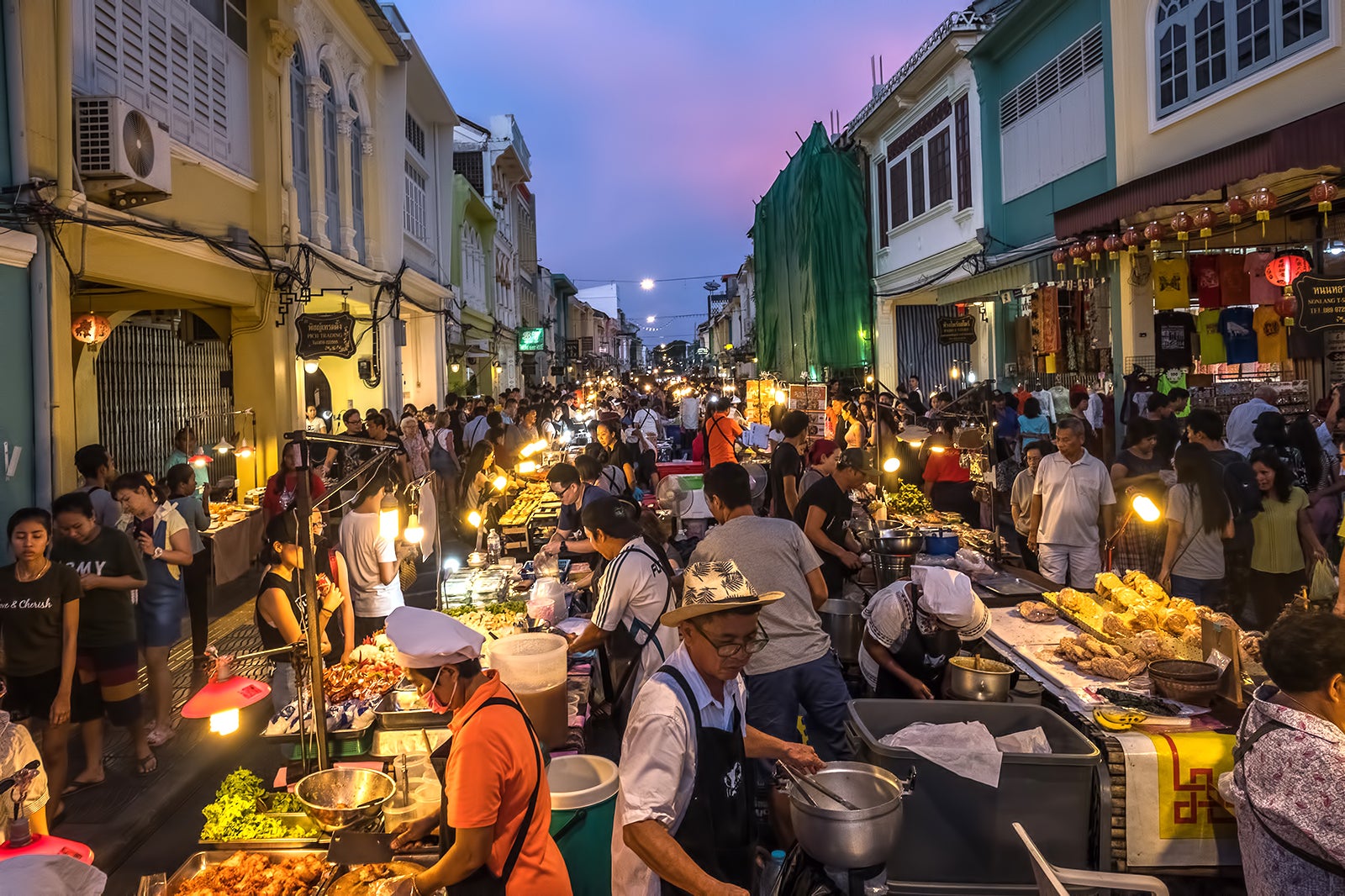
The cost of eating in Phuket reveals a clear geographic and cultural divide. A plate of pad thai at a Kathu market stall costs 50 baht; the same dish at a Patong beachfront cafe runs 250 baht — identical ingredients, vastly different overhead. Local markets open before dawn and operate as the island's true price anchors. Vendors at Chillva Market and Kathu Fresh Market sell curry rice plates, grilled satay, and som tam for 40-80 baht. These aren't tourist traps — they're where Thais eat daily, and the quality reflects decades of neighborhood accountability. Mid-range shophouse restaurants in Phuket Town charge 100-180 baht for traditional southern Thai dishes, balancing authenticity with air-conditioned comfort. The expense question shifts when visitors remain inside tourist zones. Bangla Road restaurants, beach clubs, and hotel dining rooms apply 200-400 percent markups over local rates. A seafood dinner that costs 600 baht at a Rawai pier restaurant becomes 2,400 baht at a Patong resort. Both serve fresh catch — the premium funds location, service theater, and imported wines. Thai cooking classes at venues like the academy in Kathu District charge 2,300 baht for half-day sessions. The fee includes a morning market tour where instructors reveal ingredient pricing: lemongrass bundles for 10 baht, galangal roots for 15 baht, whole coconuts for 20 baht. Participants discover that Phuket dining costs reflect ingredient accessibility more than scarcity — fish sauce and palm sugar cost pennies, but imported cheeses and steaks carry mainland freight premiums. Understanding this pricing architecture transforms how visitors approach meals across the island.
“A plate of pad thai at a Kathu market stall costs 50 baht; the same dish at a Patong beachfront cafe runs 250 baht — identical ingredients, vastly different overhead.”
Phuket offers a wide spectrum of dining options, ranging from affordable local street food to premium international restaurants. Your daily expenditure depends heavily on whether you choose local markets or upscale venues.
How to spend less
Verdict: A budget-conscious traveler can spend approximately 800 THB per day, while those seeking more comfort should budget around 2,500 THB per person.
The best arrival window for classes is 09:00–13:30, as this period includes guided market tours that provide insight into ingredient pricing. Visiting during these hours allows you to observe how fresh local produce is sourced at optimal value.
—
Lower visitor volume allows for more focused instruction and personalized market interaction.
Cool and dry, 24°C–31°C
Peak tourist season results in busier markets and higher demand for cooking class spots.
Hot and humid, 28°C–35°C
This period offers a quieter atmosphere to explore local ingredient costs before the rainy season.
Rainy and humid, 25°C–32°C
Lower foot traffic often correlates with competitive local pricing for ingredients and services.
Verdict: The optimal time to visit is Monday to Sunday between 09:00 and 13:30, ideally during the shoulder months of May or October to balance crowd size and ingredient availability.
The cooking academy maintains a consistent schedule throughout the week to accommodate visitors researching local culinary costs. We are open daily to assist with your planning.
Everything you need to know about is food expensive in phuket
Travelers often find that while luxury dining options exist, overall costs for meals remain quite reasonable. Understanding if food expensive in phuket depends largely on your choice between tourist-centric restaurants and authentic local eateries. High-quality ingredients are readily available at competitive prices in traditional markets.
A half-day cooking class provides significant value by combining a meal with a hands-on experience. While a session costs 2,300 THB, this includes professional instruction, fresh ingredients, and a market tour, which differs from a standard restaurant bill. Many visitors find that asking if food expensive in phuket is best answered by considering the educational value of these classes.
Shopping at local markets is very economical and provides the freshest produce for your meals. If you are wondering is food expensive in phuket, visiting these markets will show you the affordable price point of tropical fruits, herbs, and spices. Using these fresh items in a guided environment helps guests appreciate the local cost of living.
Taking a cooking class can teach you how to source ingredients efficiently, which helps manage your budget long-term. This practical skill makes it easier to navigate local grocery prices during your stay. Learning these techniques is a smart way to address concerns regarding is food expensive in phuket.
The standard fee for a half-day class is 2,300 THB, which covers your instruction and all necessary ingredients. This transparent pricing allows you to plan your travel budget effectively without hidden costs. It is a structured way to experience authentic Thai flavors while maintaining a clear view of your expenses.
Street food remains the most budget-friendly way to eat throughout the island. You will find that local vendors offer delicious, filling portions for a fraction of restaurant prices. Exploring these stalls is the most effective way to see that dining out does not have to be costly.